
Introduction
Following the release of Blasphemous II in August 2023, The Game Kitchen created a special team to develop a new 2D installment in the NINJA GAIDEN series. Our studio has extensive experience and expertise in action based pixel art, and we received a golden opportunity from Dotemu, the publishing company, and KOEI-TECMO GAMES, the company that owns the IP.
It soon became clear that the work pace we were going to follow on NINJA GAIDEN: Ragebound would be quite different from the one we had on the second part of our own IP. I was left in charge of composing and producing the soundtrack, as well as sound design and implementation. As the end of development approached, I was able to count on the help of Daniel Parejo and Sara Martínez.
Having the opportunity to make a new 2D NINJA GAIDEN was like a dream come true! As I progressed through pre-production, I realized the enormous responsibility this job entailed: the original trilogy is one of the most legendary and beloved in the history of 8-bit video games. Keeping the NINJA GAIDEN fans happy, who had been waiting for a new side-scroller installment for over 30 years, wasn't going to be easy.
From the very beginning, the audio approach to the game was to create an updated take on classic arcade games, moving away from the 8-bit sound in both sound effects and music. I'm a huge fan of the 2a03 chip, but using it in this game would have led audiences to believe our game was a pure remake of the classic titles. Our goal was to respect the legacy, pushing it up to an artistic level that went far beyond the technological limits of the classic 8-bit Nintendo systems.
Sound Design: Katanas and Kunais!
In contrast to Blasphemous II, where the sound had to be atmospheric and evocative, in NINJA GAIDEN: Ragebound the experience had to be purely arcade-like. The sound, in addition to providing feedback on character controls, had to help with the readability of scenarios, enemy and boss combats, striking beats (special events that may happen during gameplay: a meteor rain, a demon driving a bulldozer chasing you, etc.), and so on. "It's an arcade game, not a simulator" was my most repeated mantra during development. The players had to be aware at all times of the most relevant elements of the game from an audio perspective, keeping in mind that the action was going to be very frenetic and that the soundtrack had to be at full energy at all times. My goal was to bring the player to a state of flow that bordered on overstimulation.
Asset Creation
Asset design was carried out in Reaper, which is our DAW of choice for these tasks at TGK, essentially due to the agility of importing all types of video captures, nesting channels into groups, extensive export options, etc. Initially, I wanted to use only my own recordings as source material, but due to time constraints, I had to opt to combine them with libraries.
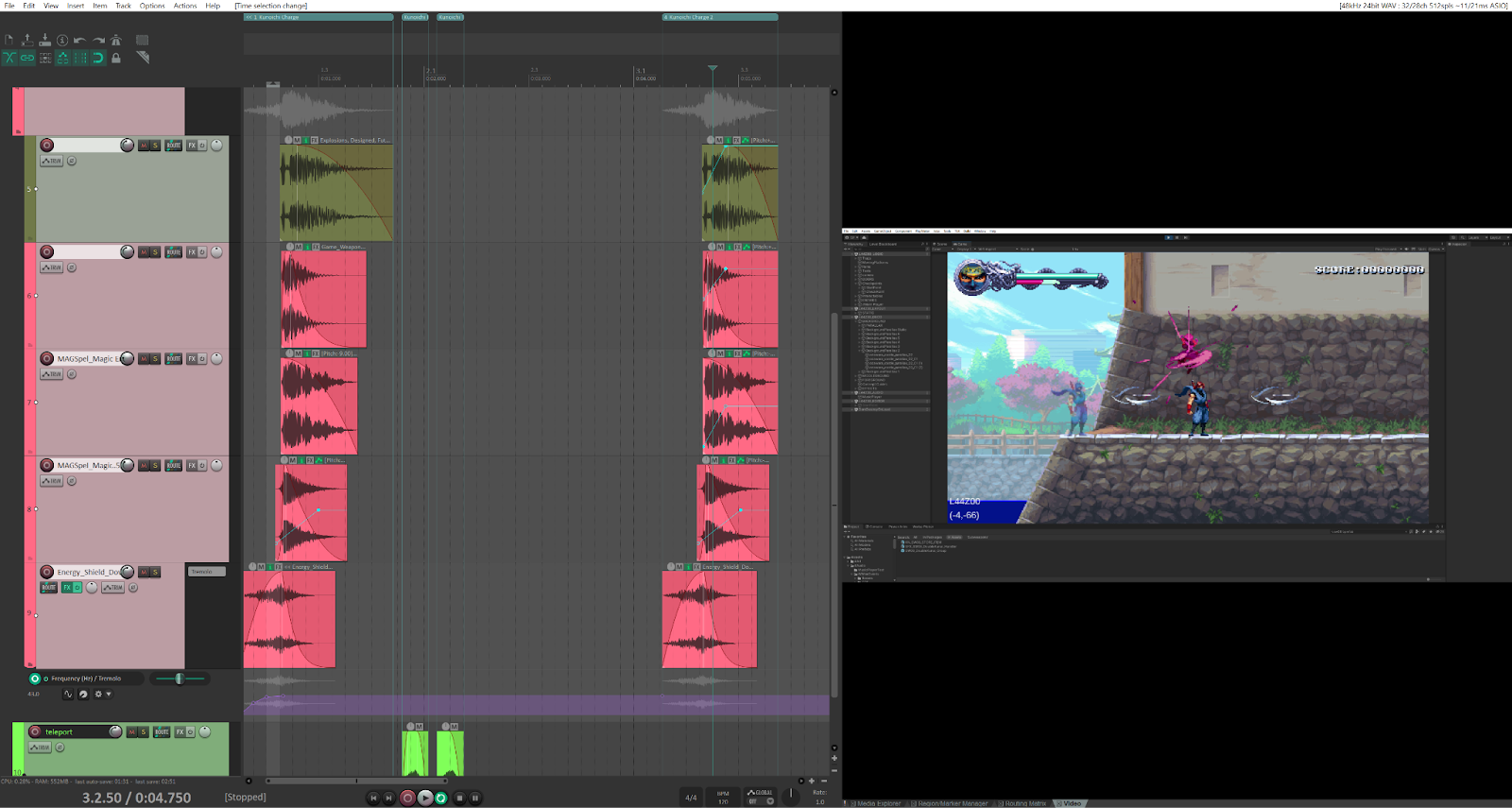
The sound effects related to combat were of particular importance: katana and kunai blows, weapons, enemy attacks, gore elements, bosses, etc. My goal was to make them as striking as possible and offer some limited variability, while also making the gameplay easier to read.
The basic layers of sound effects that are developed in the game are:
- Ambient sounds: the purpose of this layer is to provide very general information about the environment and prevent the soundscape from being a complete “blank canvas.” This layer is very low in the mix, as it is necessary to leave as much space as possible for the music and gameplay effects.
- Level element sounds: traps, breakable elements, interactables, means of transport and vehicles, props, etc. These are elements that make the game world feel much more alive, so they had to have as much affordance as possible.
- Character sounds: The care taken with this group of sounds is the most important factor in achieving a state of flow and maximizing the game's action and readability. We have three playable characters and more than forty different enemies, with a multitude of animations: idle, walk cycles, attacks, jumps, deaths, etc. The bosses are a very particular case, since each one is quite different from the rest and has its own idiosyncrasies: there isn't much in common between Rhyvashi's insect-like sounds and Isolated Battleship's battleship attacks.
To emphasize the game's sonic readability, and bring it closer to classic arcade territory, it was clear that we had to opt for a fairly straightforward mix, with little room for subtlety. Controlling the attenuation of emitters with respect to the distance of action (especially of enemies) was a particularly delicate task.
An important point was the search for a suitable audio design for Kumori's detours, in which we activate a low-pass filter, a light overdrive-type distortion, and a couple of layers that form a kind of demonic drone. We also activate a slight delay effect that gives the action an otherworldly feel. The sensation we were looking for was that Kumori moves through a dark parallel world, one in which you are separated from reality and where you shouldn't immerse yourself for too long.
Implementation with Wwise and Unity
We have a number of tools in Unity that are very useful for integrating audio into the game. Here are some of the most interesting aspects:
- Event Builder: All events in Wwise have their own Scriptable Object in Unity, which we use as a reference to post them and to control Actions on Events (play, stop, pause, resume). Thanks to this tool, we can automatically generate all scriptable objects from any Working Unit we select with just a couple of clicks. Simple code that brings high quality of life!
- Terrain Assigner:Thanks to the intense training he undergoes, Kenji is able to run, climb, and hang from any GEO entity in the game (solid elements such as walls, ceilings, etc.). Naturally, the sounds vary depending on the type of surface, so we had to assign different materials to each side of each block in each level... That meant countless hours of work! With this tool, all of this could be done automatically, using an algorithm that identified the decorative tiles used in each level through a tagging system.
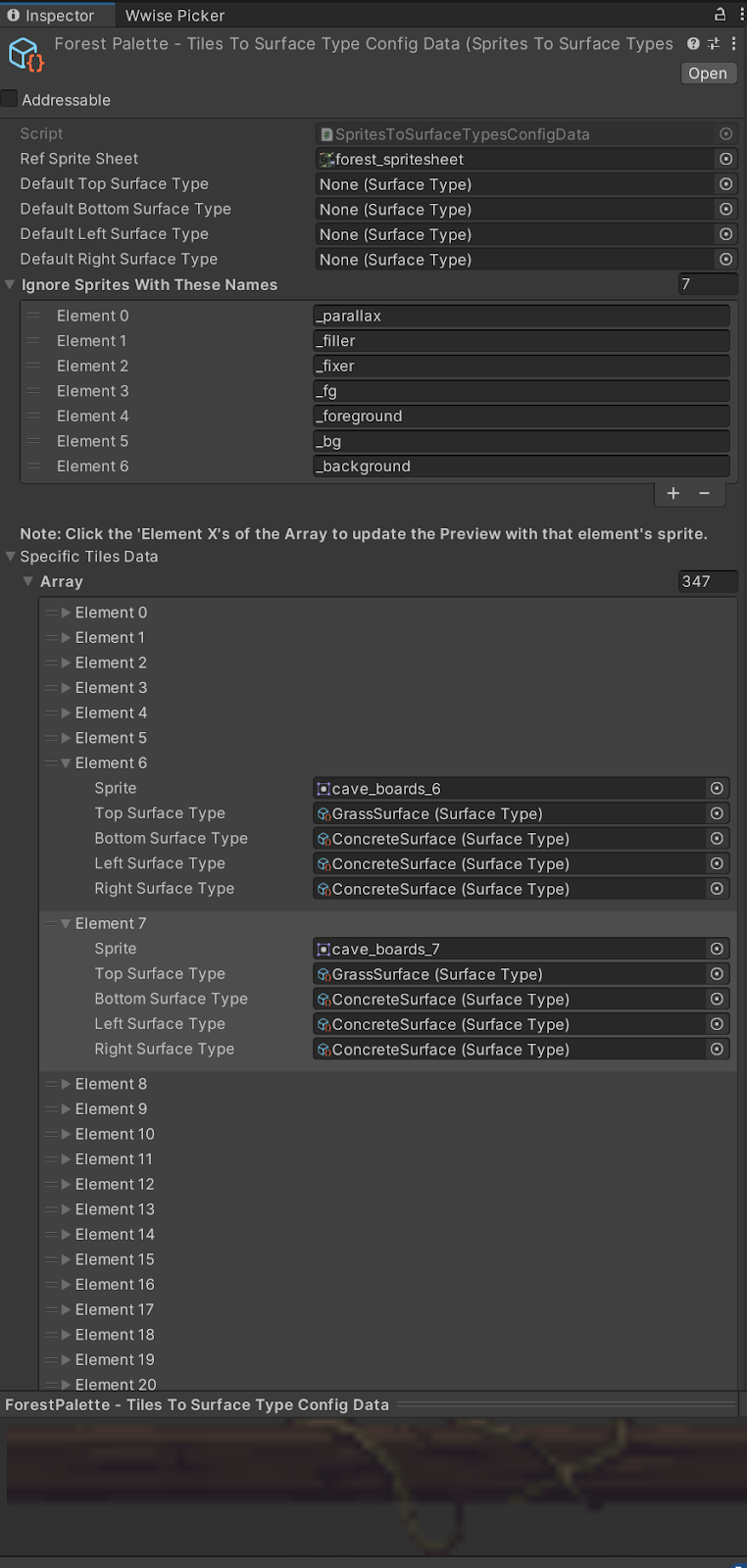
- Animator-Based Sound Handler: Most of the sounds emitted by characters use cues configured in specific frames of different animations and/or states of their animator. This tool, an evolution of a version we already used in Blasphemous II, allows us to make detailed edits to these cues for optimal synchronization.
- Automatic Bank Management System: Soundbanks are loaded in two different ways. On the one hand, we have specific banks for each level that are configured manually. On the other hand, we have elements that are repeated in a variety of levels (such as traps or enemies), which load and unload their banks from their spawners. We opted for a highly modular approach, which minimizes the memory load of sound effects. Almost without exception, when you load a prefab into a level, its bank is automatically available.
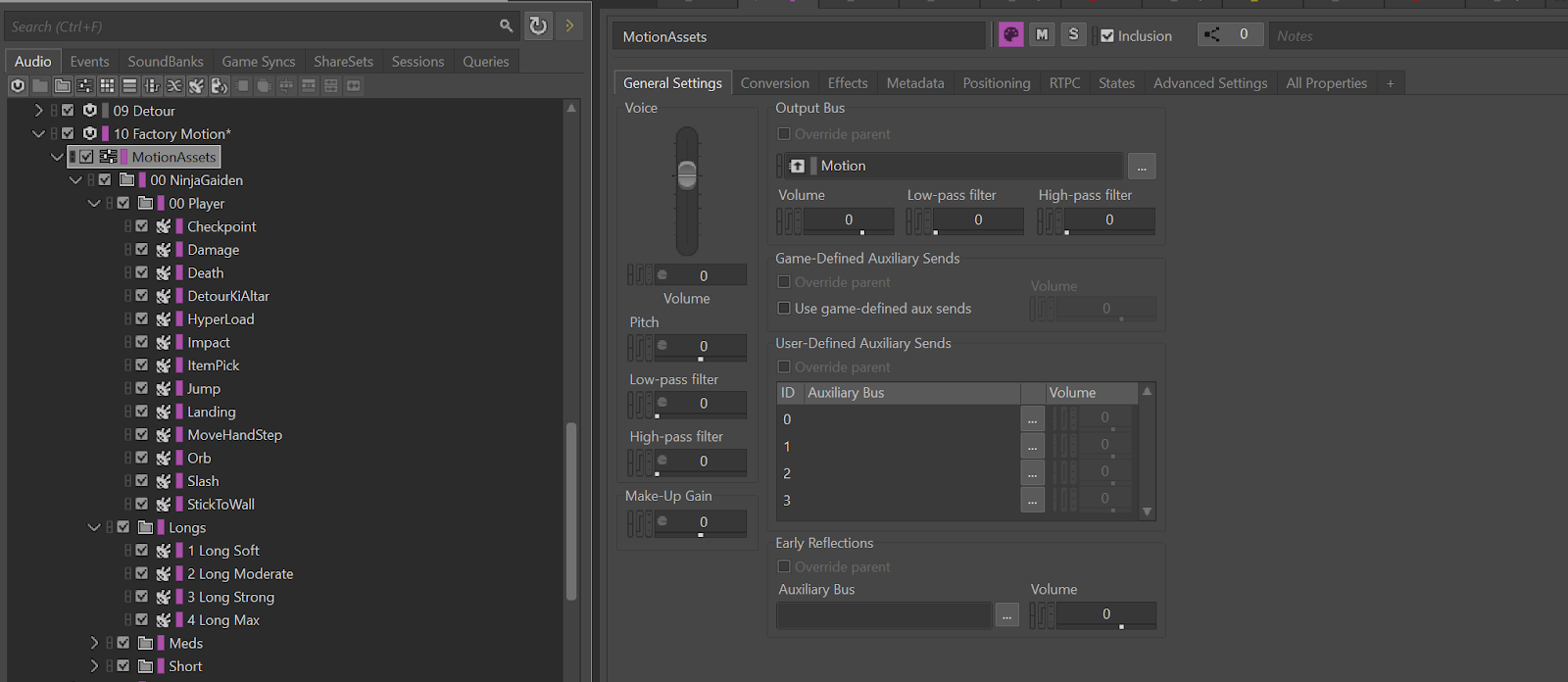
- Using Motion for Haptics: Motion has been of great help, as its philosophy of use and design is really straightforward. For haptic feedback related to long and complex sounds (earthquakes, thunders, big vehicles, etc.), we used an aux send routed to Motion’s channel, while for the most repeated haptic vibrations in the game (attacks, hits, impacts, etc.), we used our own collection of self-designed presets. It was great to be able to iterate quickly thanks to this tool, as we could very quickly integrate feedback on game feel that I received from the game designers.
Soundtrack
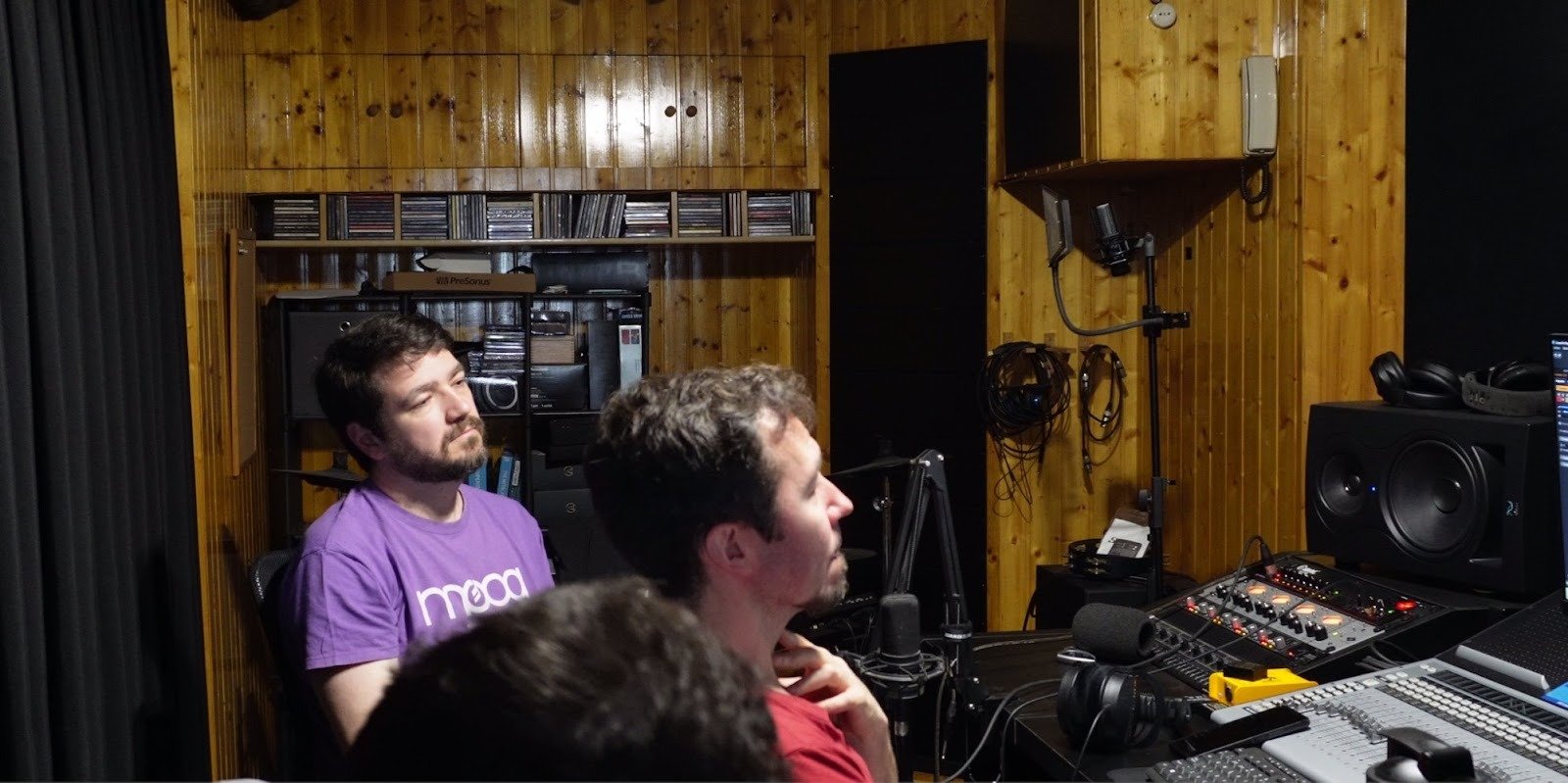
NINJA GAIDEN: Ragebound features a fairly extensive soundtrack—over two hours in total! The music was almost entirely composed by me, with the exception of contributions from Keiji Yamagishi, Ryuichi Nitta, and Kaori Nakabai, composers for the original Famicom trilogy, who were included in the game courtesy of Brave Wave Productions. Leo Peña of JOTUN STUDIO mixed and digitally mastered all the tracks, while Benjamin Joubert handled the analog mastering for the 2xLP release. The soundtrack has been released by our friends from Kid Katana.
Music production
The musical aesthetic combines sounds from the 80s and 90s, influences from Japanese animation music, progressive rock, and elements from retro games on Red Book CD Audio. I was lucky enough to be able to use some romplers from my collection: Korg TR-Rack, Roland JV-2080, Yamaha Motif, etc., and some even more classic synthesizers for a more retro feel: Roland Juno 106, Yamaha CS-15, etc. The guitar recordings were a combination of PRS, G&L, and Solar guitars run through some Bogren plug-ins and an Axe-FX unit. The production was carried out entirely in Cubase, whose MIDI sequencer remains my favorite.
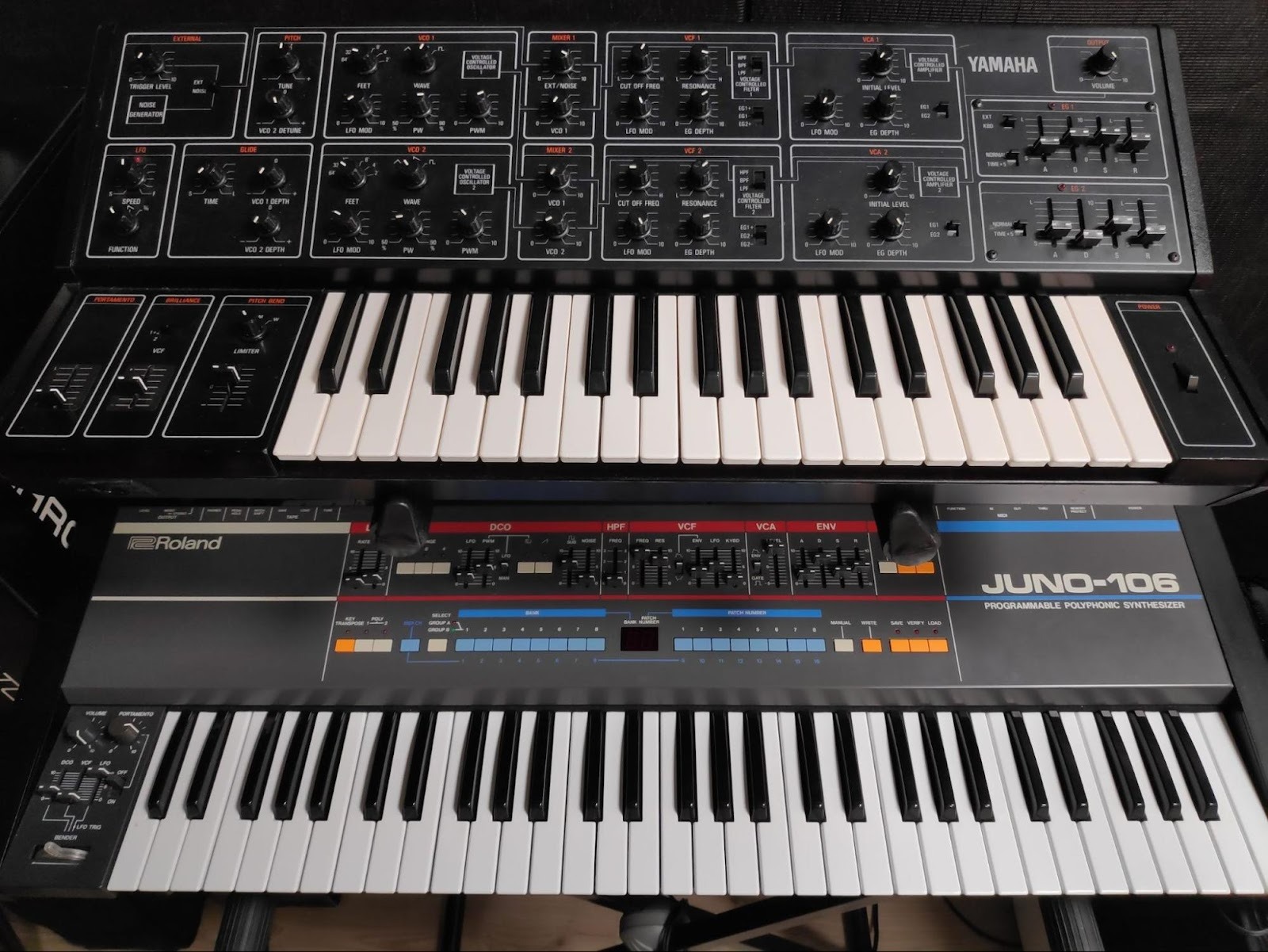
Here are some key points about the game's music:
- The energy level had to be exceptionally high to match the action. Each level has between two and four different tracks, which usually share a common sound template (or "track families", as I like to call them). This was done to streamline the mix and achieve greater sonic consistency.
- At the same time, it was important to find the right moments to give players a bit of an auditory break — during cutscenes, on the map, in the shop, and so on. For those parts of the game, I focused on slower tempos, ambient-style sounds, and simpler arrangements. We were also lucky enough to have Hitomitoi collaborate on the end credits theme — after slaying hundreds of monsters, a little rest doesn’t hurt!
- I was allowed to include some arrangements of classic songs from the original trilogy. Of course, Unbreakable Determination couldn't be left out! It’s such a classic! These arrangements feature new instrumentation and new sections, but they try to respect the original spirit as much as possible.
Integration
The music is played back through a series of switches in the hierarchy. We have a general switch for the "global" screens of the game (menu, map, etc.) and an individual switch for each level. The different switches are activated by a table that compiles special play events for each level. The state changes of these switches are controlled from checkpoints or through calls from Playmaker, which we use to control striking beats and other game events. Tracks in the same "family" usually share the same tempo and key, so the transition can be made quite smoothly.
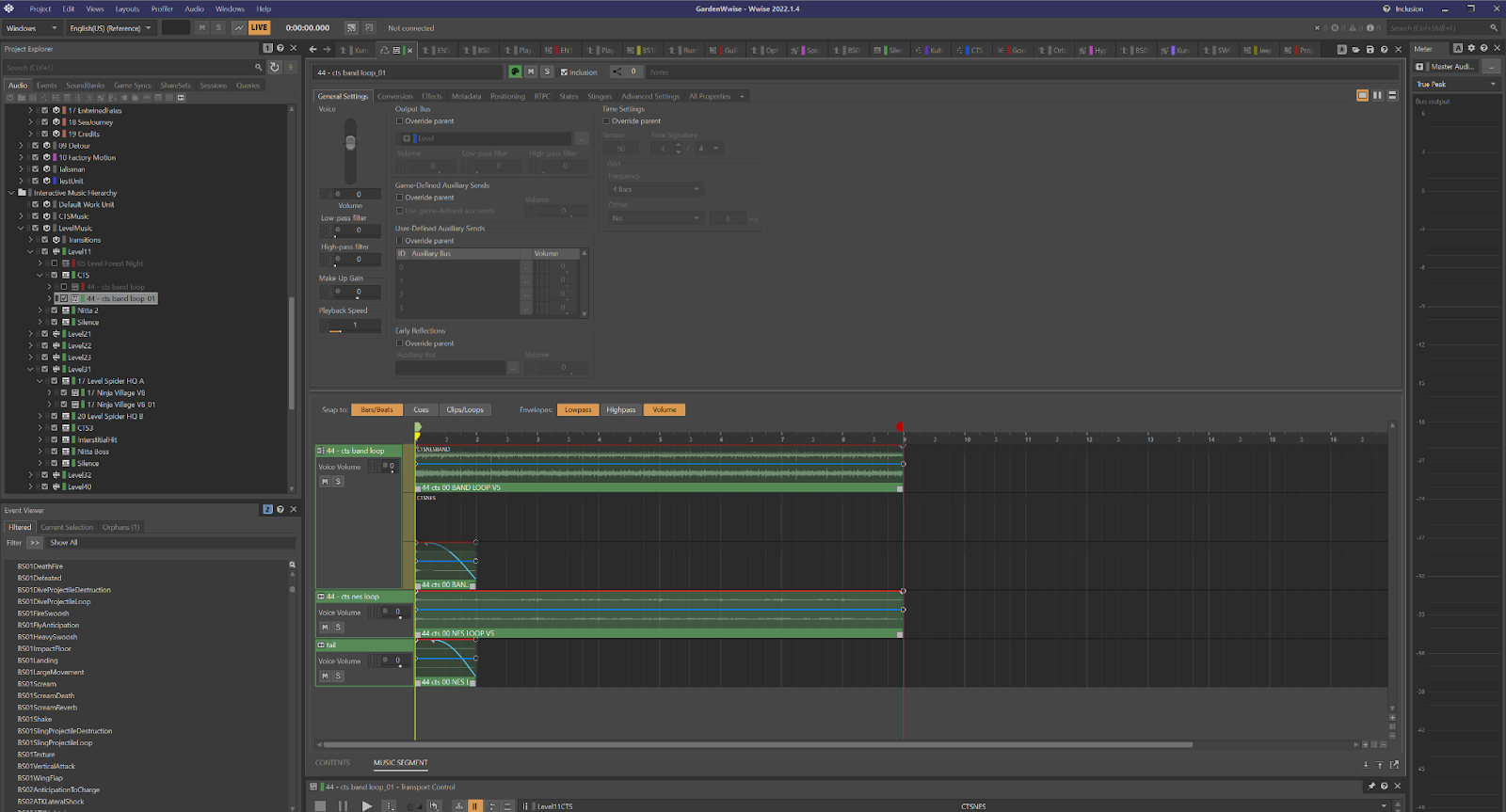
The most musically complex levels are undoubtedly “After the Demons!”, which has a track for each section (even a special one for the first encounter with Muramasa), and “Into the Shadows”, which spans from the city to the end of the game.
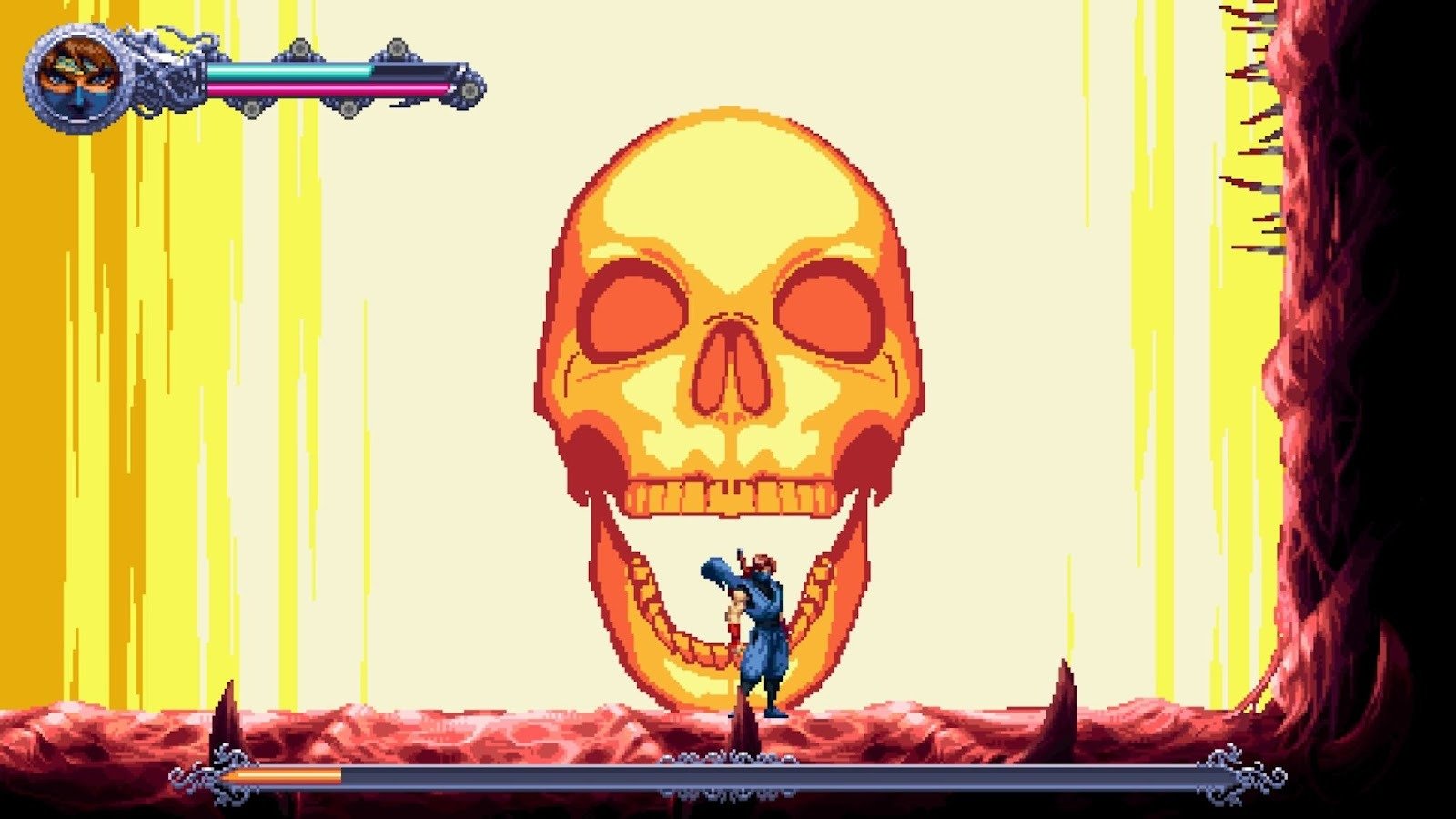
The fight against Jagäzk, the final boss, has three different musical sections, which are triggered sequentially as the boss advances through his attack stages. The last level is truly intense! I will keep this blog post spoiler-free, so I’ll just say that it was very important to take great care with the musical events that take place after defeating him, as it involves a rollercoaster of intensity changes necessary to keep up with the excitement of the story.
Debugging
As is to be expected in any development, bugs surface little by little, but thanks to my fellow programmers and the incredible Dotemu QA team, fixing them was a much more manageable task.
The Profiler has been our primary tool for controlling voices, events, state changes, and objects, along with the Unity console. The relationship between posted events and emitting objects is, in my opinion, one of Wwise's most powerful features, as it greatly simplifies the management of voices, stops, pauses, etc. It's a great help that the system is designed this way!
Some of the most relevant errors we had were:
- Loss of sound references due to animator modifications or the creation of derived prefabs that referenced the wrong handlers. As development drew to a close, enemy variations were introduced, as well as all gore-related animations (decapitations, amputations, etc.), which often sought out inappropriate events.
- Game desync due to background or pause: Initially, pausing the game while in the background wasn't supported, so even though the action was paused, periodic calls to Wwise continued. This caused the background music to "reset" unpredictably when returning to the foreground. The solution was to pause the entire game at the logical level.
- Sometimes, enemy idle animations or level traps would execute before the levels had finished loading, causing errors when starting cutscenes. We had to find methods to queue calls to certain events related to these animations, using a component that we called “SFX Player Request”.
Reception
Since its announcement during The Game Awards 2024 pre-show, we've seen genuine excitement from players about the return of NINJA GAIDEN in a new 2D installment. The trailer presentation was a real success and generated a wave of positive expectations!
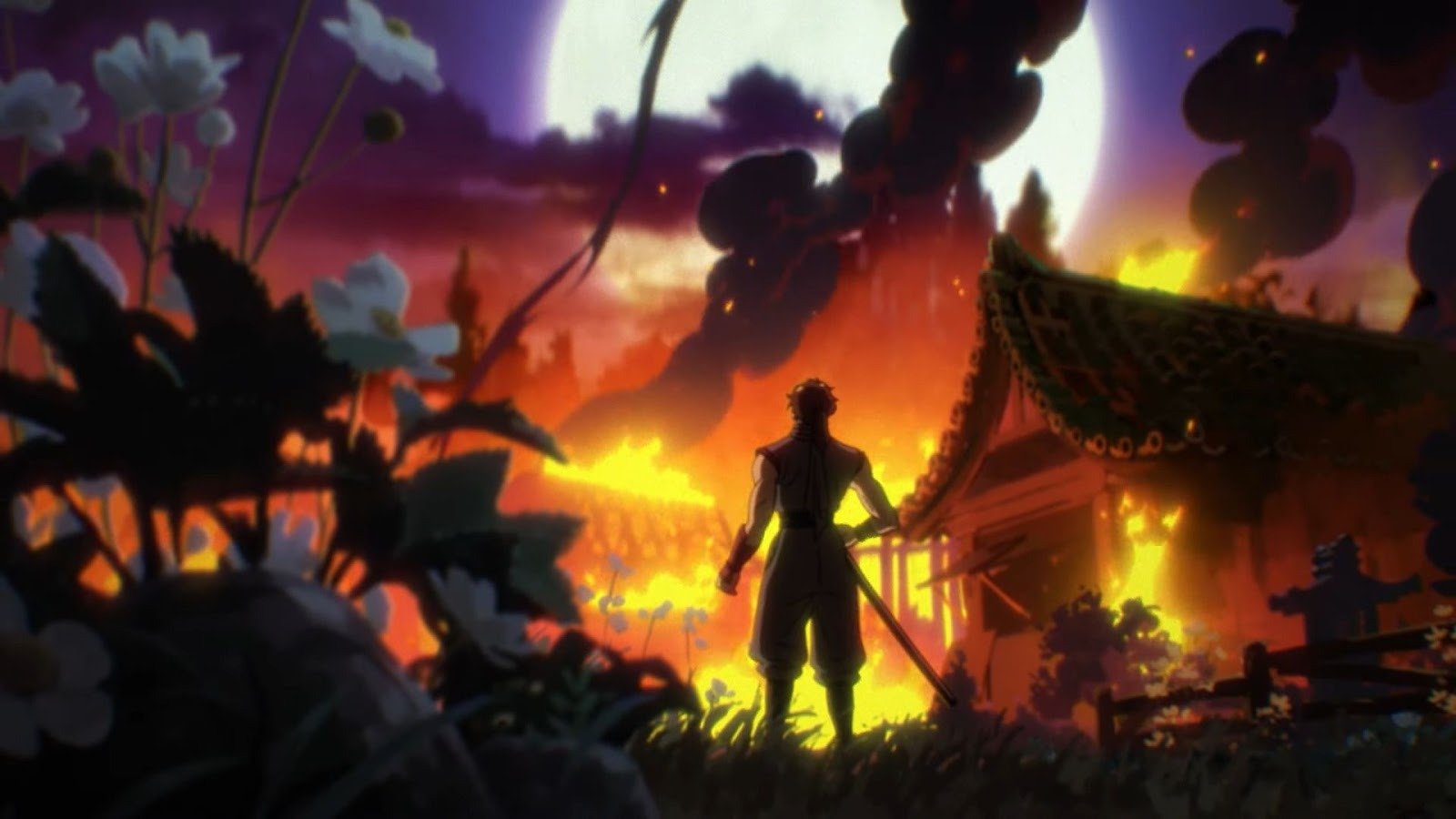
Satisfaction with the project reached its peak when the embargo was lifted and great reviews began to roll in: it was thrilling to see the excellent ratings we received from multiple specialized media websites. Having a positive and memorable impact on our players is what our jobs in The Game Kitchen is all about. That’s why our motto is, more than ever: "We Make Meaningful Indie Games."

Comments
Bret Bernhoft
December 28, 2025 at 04:20 pm
I am a sound effects hobbyist, as well as a gamer. So it is both fascinating and encouraging to read about how the real pros build assets for the games I love. Thank you for taking the time to overview how it is done.