
This article will present Midas Merge’s audio ideation and how we use Wwise to create the sound for this fantastic and relaxing Merge 3 experience.
Introduction
When game development begins here at Wildlife, two main aspects are essential for shaping the game experience and ensuring it resonates well with the target audience based on technical and artistic considerations.
Artistic Direction for Merge 3 game type:
- Our artistic objective was to craft a fantastic and "cozy" atmosphere that complements the game's visual identity and enhances its features while navigating the technical constraints inherent to mobile gaming.
Definition of technical tier, focused on Midas Merge’s target audience:
- Wildlife exclusively focuses on mobile devices and internally utilizes seven different "technical tiers." This strategy allows us to adapt and optimize our systems so that the player's experience is seamless and enhanced while maintaining the highest possible audio quality. For Midas Merge, we focus on our first five tiers as primary targets. It was essential to set up all boundaries that could limit a few audio systems and create the opportunity to find different ways to apply our artistic ideas.
After defining these two main aspects, we can start to create and map the sound of Midas Merge and how we can achieve high-quality sound for our player base. We will explore these aspects further.
What is Midas Merge?
Midas Merge is a mobile game that beckons players into a mesmerizing adventure of merging objects to unlock treasures. With its intuitive mechanics, Midas Merge offers a delightful blend of challenge, organization, and relaxation for players of all ages. As they combine objects of increasing value, they uncover new riches and unlock new lands to expand their wealth and room to hoard even more of everything, challenging players to stay organized and patient. With each merge, players experience the satisfaction of progress and the anticipation of new treasures. From its charming visuals to its immersive soundscapes, Midas Merge invites players to immerse themselves in a realm where capybaras can fly.
Idealization (audio/direction)
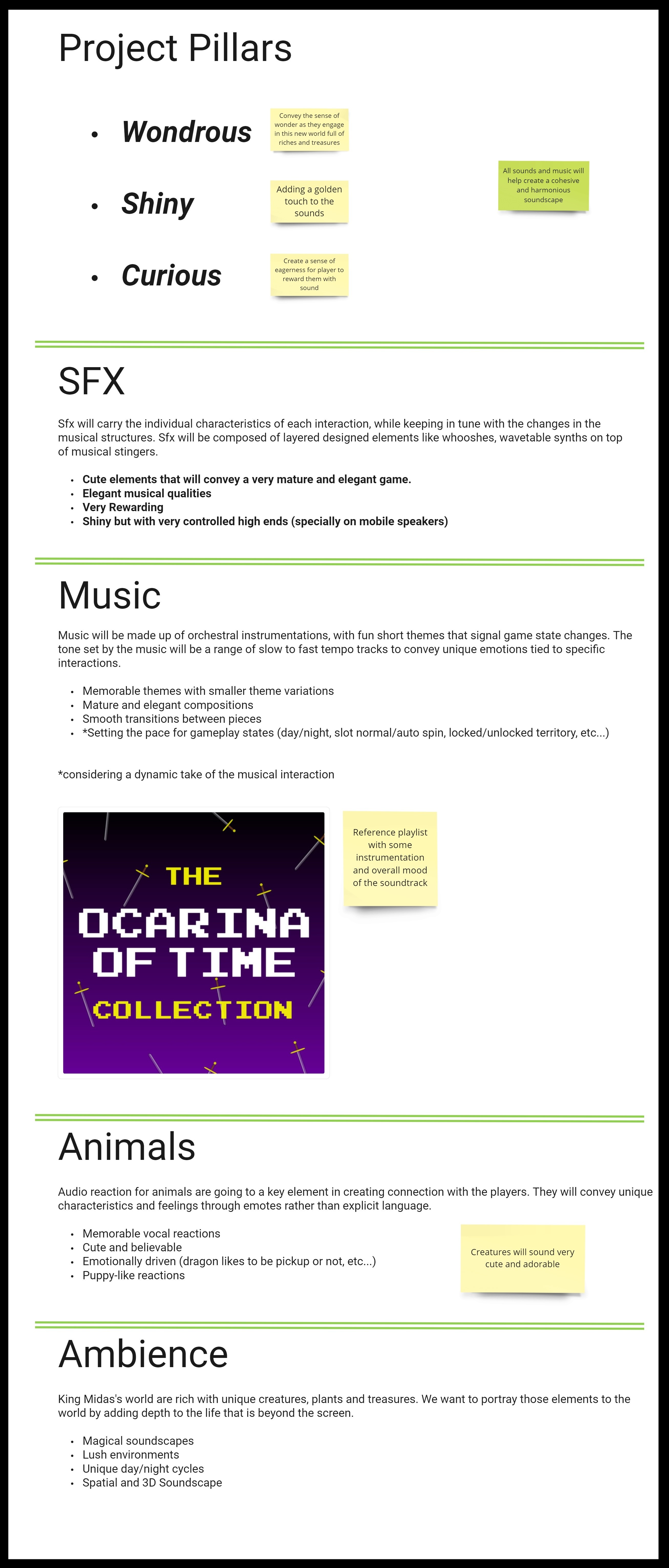
Our initial discussion with Never Forget Games centered on creating a game where players would prefer to keep the audio on, crafting a soundscape integral to the overall experience. We were thrilled to discover that, upon release, most players chose to play with the audio engaged.
This was our first major project within Wildlife, and we were determined to get everything right from the start. Initially, without a playable build, we relied on gameplay footage of the vertical slice provided by the developers. Following our first briefing, we began drafting the Audio Direction document, a crucial step in all our projects. This document transforms conceptual ideas into specific terms, setting clear expectations for the team and guiding our creative direction.
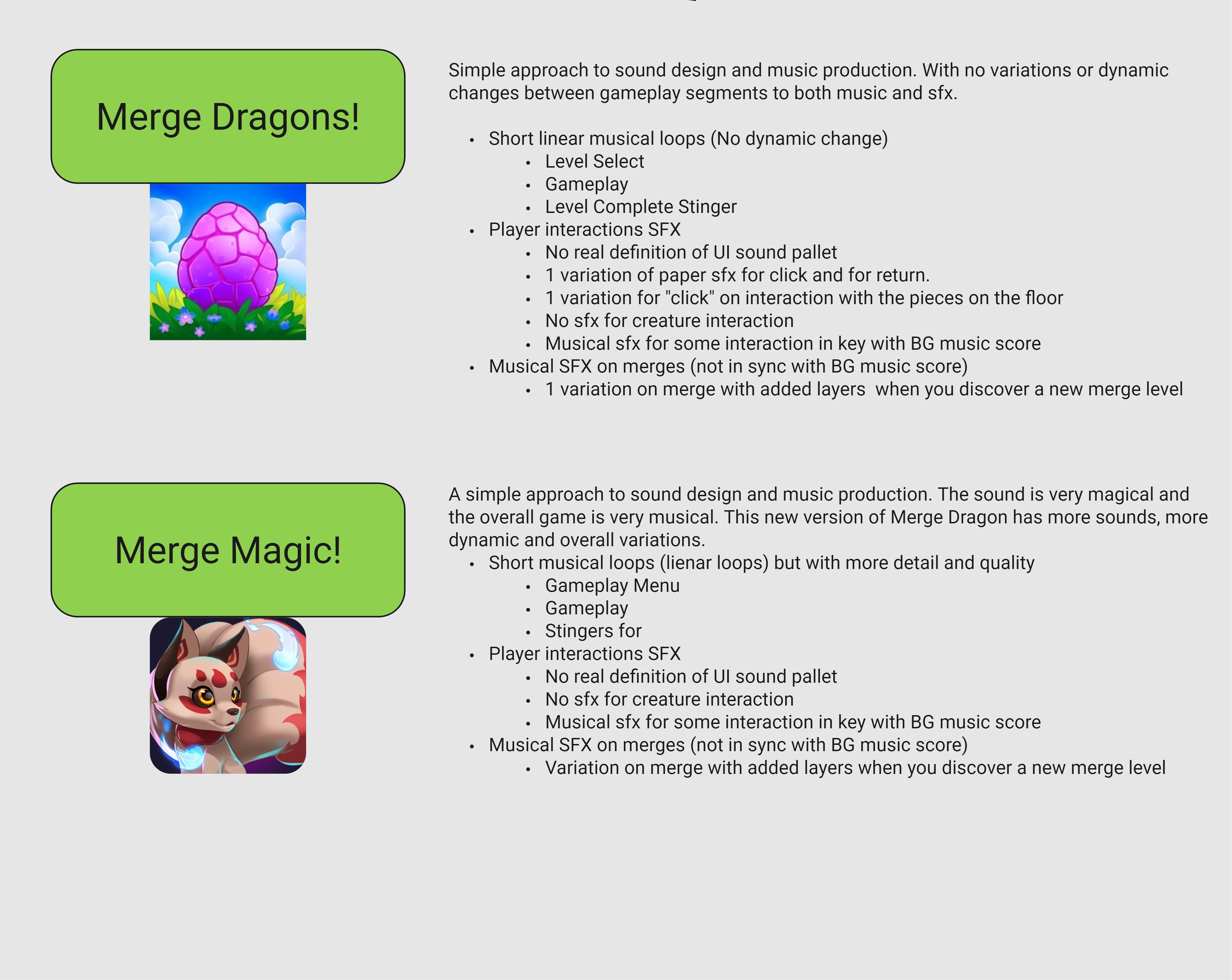
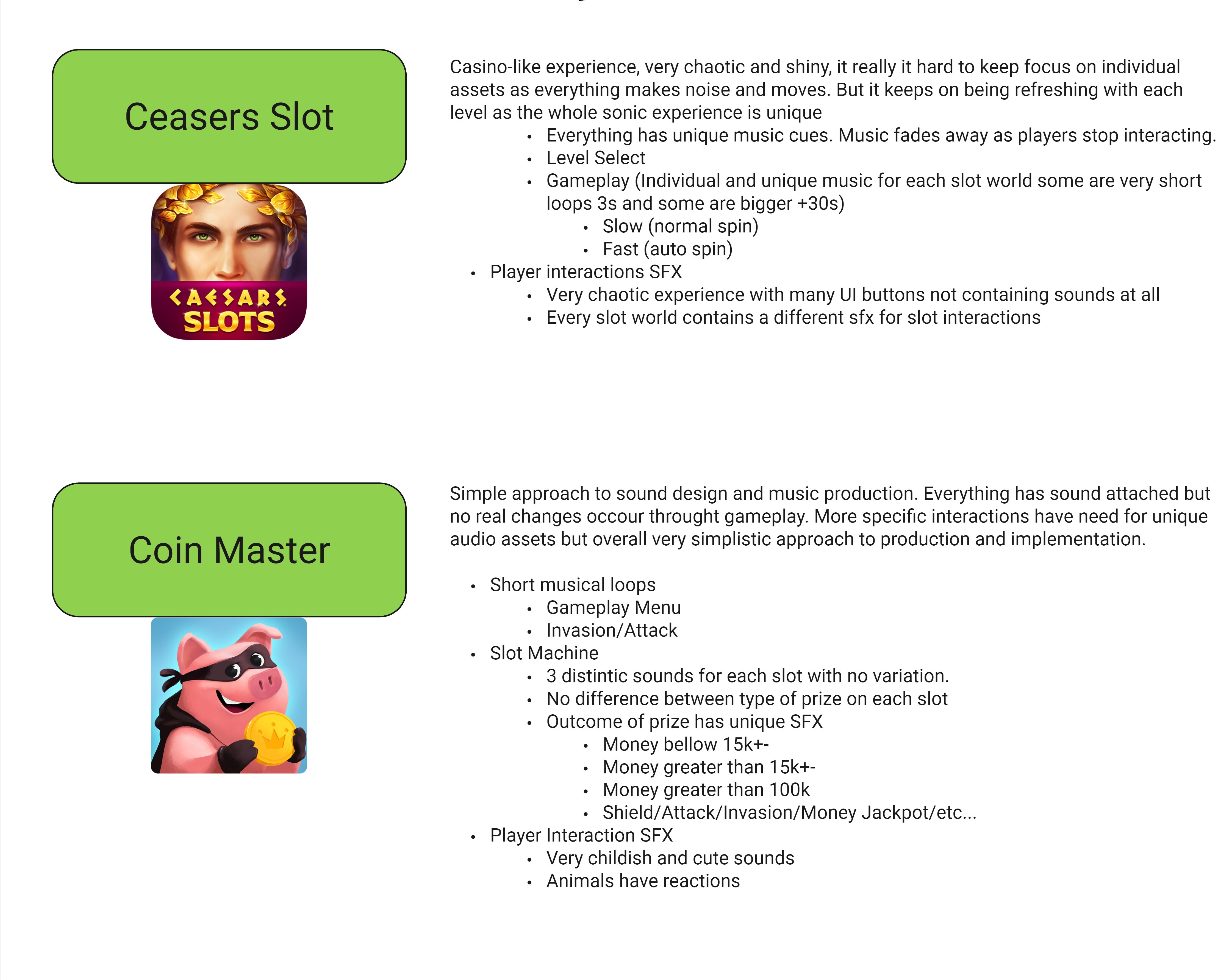
Part of our methodology involves an internal benchmarking process. We analyze the audio strategies of successful games within the same genre and the primary references cited by the developers. By studying how these games handle audio, we gain insights that help us refine and evolve our audio experience. This straightforward but effective approach lays the groundwork for our discussions.
We started developing sound and music concepts once these internal processes were in place, along with gameplay footage. At the time, our Audio Director Vincent Diamante, emphasized the importance of asking the right questions. For music, we debated between Eastern-style compositions, akin to Joe Hisaishi’s work for Studio Ghibli, and the distinct style of Thomas Newman’s scores for Disney. This decision would also influence the overall sound design, including sound effects—should they evoke an anime-cute aesthetic? After numerous internal discussions and iterations, we produced a first draft of the game's audio profile, shaping players' unique and engaging auditory experience.
After sharing the video with Never Forget Games, we had most of our questions answered, allowing us to begin mapping out the scope, budget, and timeline for our deliverables. However, this also raised several new questions, particularly regarding the audio budget and how much we could allocate given the scope presented to us.
The Sound of Merges
In crafting Midas Merge, our primary focus was leveraging sound design's musical elements to enrich the game world. To achieve this, we carefully defined the realms of consonance and dissonance for sounds. Each aspect of the game, from merging to harvesting, had its own unique instrumentation and movement, ensuring a dynamic auditory experience. We meticulously balanced the number of assets to avoid repetitions while staying within our audio budget.
We opted for the E Lydian scale, known for its bright and magical qualities, to convey the desired atmosphere. This scale perfectly encapsulated the enchanting and wondrous vibe we aimed for in Midas Merge.
We approached sound effects with a keen focus on enhancing player immersion and differentiating gameplay elements. We divided our sound effects into two distinct categories: mechanical and musical.
Mechanical Sounds: These sounds are directly tied to the physical interactions within the game world. For example, when merging objects or harvesting resources, players experience auditory feedback that corresponds to the action on screen. To make these sounds stand out and feel more engaging, we utilized a technique we referred to as "cuteness overload." This involved incorporating elements inspired by oriental anime sound design, such as exaggerated frequency shifts, chorus effects, and delays. By layering these effects over the mechanical sounds, we created a rich and vibrant audio landscape that captured players' attention and heightened their immersion. For instance, when objects collide or break, the resulting sound is realistic and infused with a whimsical charm that adds to the game's overall appeal.
Musical Sounds: Central to our approach was using musical sound effects on top of the mechanical layer. With that, we ensured that every auditory cue resonated with the enchanting vibe of Midas Merge. Whether it was the twinkling of gems or the fluttering of fairies, each sound effect carried a different combination of instruments and melodic qualities that could set apart specific interactions from each other and create anticipation for progressing after each click or merge.
Musical Stingers: One of the standout features of our musical sound design was the use of musical stingers. These stingers were tied to specific in-game events, such as merging objects or achieving rare combinations. By creating unique stingers based on gameplay events, we added a layer of excitement and anticipation to the player experience. Whether it was the triumphant fanfare of a successful merge or the ethereal chime of discovering a rare item, these musical stingers heightened the emotional impact of each moment. They kept players fully engaged in the action.
Beyond just providing auditory feedback, the musical sound effects in Midas Merge were intricately woven into the fabric of the gameplay mechanics. This integration not only enhanced the overall immersion but also provided players with valuable auditory cues. By aligning the musical sound effects with the core mechanics of the game, we ensured a seamless and harmonious experience that could captivate players from start to finish.
The Technical Part of Merges
Challenges
Supporting what the artistic team proposed and the limitations of being a mobile game was a big challenge.
We knew from early on in the development that we would have a limited memory budget to work with, and with that in mind, we decided to approach this heavy musical game with a strategy that would give us leverage over these limitations. By focusing on a single musical key we produced and implemented all the musical sounds in a more cost and time-efficient way using a combination of Wwise and code.
Dynamic Overview
In Midas Merge, the sound effects can be triggered sequentially and vary in pitch over the music key, so we experimented with different approaches to avoid chaos and control it dynamically. We tried using a single asset and raising the pitch inside Wwise, pitch randomization inside a scale, and making sequences with multiple assets.
We ended up with a mix of all these options, depending on the importance and the priority.
For sounds that are more detailed and higher in priority, like the merges for example, we crafted unique assets for a sequence, and the sequence not only goes up in pitch in the scale but also grows bigger in instrumentation to make long sequences super satisfying and rewarding for the player.
Sounds that can trigger extremely fast have fewer unique assets, are less detailed, and have pitch variations crafted inside Wwise, so we can make a lot of notes on the scale while saving on space. Most of the sounds in this category have cooldowns and play randomly, so we can have some differentiation from the other sounds that usually go up the scale linearly and a bit more control on the mix since multiple sounds can be triggered in a matter of seconds.
On top of all the musical interaction sounds, we have a ton of stingers that are used for feedback for things like garden level up, item discoveries, and feature unlocks.
These features are asynchronous in the game, and to keep the audio chaos in check we had to create some rules. Almost all stingers are hard-limited to play one at a time while killing the new ones that trigger in its duration. There are a few exceptions for high-priority stingers, like leveling up, that can play on top of others, ducking the current stinger volume for more control in the mix, avoiding noise pollution, and rewarding the player for the milestone.
With all the musical events happening in the game, we decided to take a very laid-back approach to music implementation to keep the experience pleasant. It is easy to overwhelm the player with musical sounds and these can cause ear fatigue extremely fast. We had to hold on to the number of assets because the memory budget was already almost all on the musical sounds, so we decided on having just a couple of tracks for gameplay.
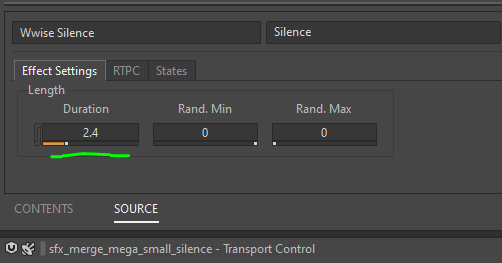
It works as a sequence with a lot of breathing room for the sounds to shine. The music is very chill and soothing and we play it in a sequence interspersed with silences of random durations between 5s to 40s. By having these moments of silence in the music we add some dynamic to the overall mix by letting the ambience cut through and the lower priority sounds pop more.
Mixing
This game is very interaction-heavy, and since everything has audio feedback, we needed to use many different techniques to achieve a pleasant mix. We relied mostly on States and RTPC changes, contextual audio picking, and some sidechaining.
We use RTPCs to control the volume of different macro layers of sounds. For example, players can control how zoomed-in or zoomed-out they play the game, and this affects the volume of ambience, music, and 3d sounds in the game, adding more or less reverb/delay to certain sounds like the XP bubbles popping.
For States, we usually keep them for UI overlays and zone changing. We control and make changes to the volume and filtering of game sounds, music and ambience if there are any UI elements on top of the game screen, like windows or tutorials, and to change the soundscape if you are in the garden or in the slots zone.
On certain special occasions, we use both to achieve what we need. For example, when Nyx enters the garden, we use RTPCs and States to change the whole mix and lower the pitch of the music to create an unsettling atmosphere.
One of the main issues we found during development is how trigger-dense some interactions can be. While playing, you can set up long chains of merges, land cleansing, and tile unlocking. These trigger long cascading sequences of sounds that would increase our voice count very dramatically. The way we decided to deal with this is by detecting when a long cascade of events is going to go above a certain threshold and replacing the individual sounds with a longer and more lush single sound. This helped clear up the mix's voice count, volume, and overall feel.
A variety of sidechain techniques were used to balance everything out when multiple sounds are playing at the same time. We used the standard auto-ducking system for sounds that don’t need precise control over the effect (i.e. cutscenes). We used an auto-ducking trick for all the stingers by feeding it silence, so we could smooth out the release of the effect to match the tail of the stinger.
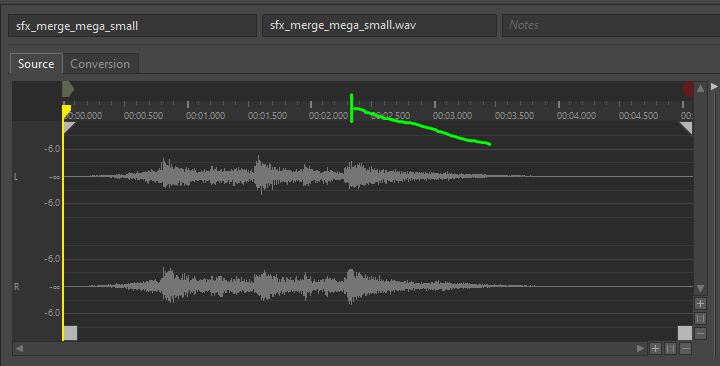
For sounds we wanted to “pop” more precisely in the mix, we used the Wwise Meter effect and a priority list to control not only the volume but also effect parameters, like the EQ frequency and gain.
Last but not least, a few sounds were hard-limited to only being able to play one at a time, killing the next ones until the first one finished playing. A cooldown system was made on the code side to handle sounds that can trigger multiple times in a row, like merges and the multiple tap events we have in the game.
Most linear sequences in the game have some leniency time before we reset them, so the players can keep the combos going with some delay between the actions and not feel punished for being slow.
Optimization
Optimization was very hands-on. We micromanaged conversion ShareSets through trial and error by converting files, checking the quality, and going back and forth, pushing the compression more or less to squeeze the most out of our memory budgets. We also chose to keep a higher threshold of quality for the musical sounds since the game was crafted to have a very pleasant tonal feeling.
Since most musical sounds have different instrumentation layers baked into the asset, we couldn’t use pitch randomization, or they could easily sound off-key. So, to balance out the asset quantity, we decided to use these tools heavily on the non-musical sounds. Most have a lot of pitch and filtering randomization and little asset variation.
To reduce the quantity and size of the assets in the ambiance, we heavily used RTPCs, LFOs, and envelopes to make the assets feel longer and more varied than they actually are.
Wildlife Central Audio






댓글
Eva John
November 05, 2024 at 04:11 am
so special sounds